What it is
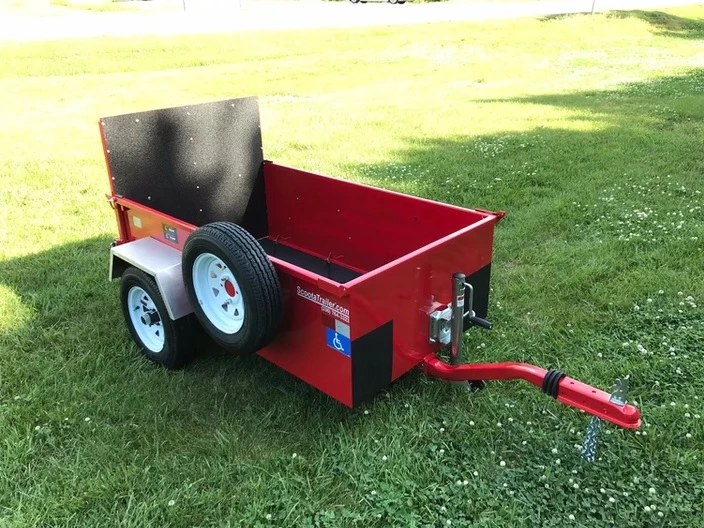
The ScootaTrailer is a purpose-built pull-behind trailer for carrying most mobility scooters and power wheelchairs. Living Spinal describes it as a way for people with compact or sub-compact cars to tow their mobility device at highway speeds without lifting it into the vehicle. Loading uses a gas shock–assisted, rubber-coated rear ramp and a bed about 9 inches off the ground, so the device can be driven on. The listing includes four rope-pull tie-downs (up to 10 attachment points), Torflex independent suspension, high-speed 145 × 12″ radial tires, rear LED signal and license lights (flat four-pin connector), a front swivel jack with caster wheel, a spare tire kit, and baked-on powder-coat paint. Maximum load capacity is listed as 600 lb. Inside bed length is listed as 66 inches, with inside width about 35.5–37.5 inches depending on the listing text. Living Spinal states it can work with a Class I hitch and with many sub-compact cars that have a hitch available.
As of this write-up, Living Spinal lists the large trailer with no top at $5,100 (marked down from $7,020), with an optional 52″ tall aluminum top (+$2,895) and optional rubber spray-in bed lining (+$650). Shipping fuel surcharges and destination add-ons apply; availability is listed as ships in 30 business days. Prices and options change, so confirm on the Living Spinal product page.
Who it may help
People who need to take a scooter or power wheelchair on the road and cannot lift it onto a hitch carrier or into a van, including drivers of smaller cars that still have a trailer hitch.
Questions to ask your clinician
- Is towing a trailer a realistic option for my vehicle, hitch rating, and parking situations?
- Can I (or a helper) safely drive the device onto a low ramp and secure the tie-downs?
- Would a vehicle-mounted lift, a van with a ramp, or another transport option fit me better?
Paying for it
Trailers like this are often a private purchase. Insurance and public programs more often cover the scooter or wheelchair itself than a tow trailer. Ask your clinician or a mobility supplier whether any funding path applies, and compare total cost (trailer, hitch, shipping) before ordering. If cost is the barrier, contact us and we can think it through with you.
Can I see one?
We keep one in our Equipment Library for in-person demos only. Use the form on that page if you want to schedule a demo.
Product listing (source for this entry): Living Spinal ScootaTrailer (opens in a new tab). Manufacturer site: ScootaTrailer specifications (opens in a new tab).