Tech Guide

Assistive Tech News

Recent news about assistive technology, summarized in plain language. Each item links to the original source. These are summaries, not endorsements, and we have not tested these products.

Latest stories

Newest added first. When a story describes what a company says about its own product, we say so. Before you change equipment or software, talk with your clinician or supplier. Last updated October 26, 2026. For our own notes on specific devices, see the Tech Guide.

A tablet on a stand showing the JoyTablet home screen with a greeting and four large buttons for calling, chatting with Joy, viewing the schedule and viewing photos, beside a phone showing the JoyFamily app, on a kitchen counter.
Image: ONSCREEN, from the press release

Communication Added

ONSCREEN releases JoyTablet 7, a voice-first tablet hub for older adults and people with I/DD

ONSCREEN says it released JoyTablet 7, which turns an existing Android tablet or iPad into a voice-first care hub. Saying “Hey Joy” sets reminders and timers, plays music and gives news and weather, and family video calls can answer automatically. Families set it up and manage it from the JoyFamily 7 phone app. The company says it is designed for older adults and people with intellectual and developmental disabilities. This comes from a company press release, so the claims are ONSCREEN’s own.

Who it may help: Older adults and people with intellectual or developmental disabilities who find touchscreens, apps or logins hard to use, and their families.

Two hands holding a phone that shows live captions of a conversation as large white text on a dark screen.
Image: Mezmo, from the press announcement (cropped to the app)

Hearing Added

Mezmo launches Bridge Live, an app for real-time captions of in-person conversations

Irvine-based Mezmo Technologies says it launched Bridge Live, an iOS and Android app that shows real-time captions of in-person meetings, presentations and conversations on a phone or tablet. A live share feature lets users share the captions with others who need them. According to Mezmo, Bridge Live is included with every purchase of its Bridge device, which captions work phone calls and online meetings. This is a company announcement, and claims about speed and accuracy are the company’s own.

Who it may help: Deaf and hard-of-hearing people who want captions for face-to-face conversations at work.

Permobil M4 Nexa compact mid-wheel power wheelchair: an empty black chair with lavender hub accents, high-back seat, headrest, joystick, and six-wheel base, shown against a white background.
Image: Permobil (from our Tech Guide entry)

Mobility Added

Permobil M4 Nexa: a compact mid-wheel power chair with full power seating

New Mobility reports on Permobil’s M4 Nexa, a compact mid-wheel power wheelchair. According to Permobil, it offers the full set of power seating functions (anterior tilt, tilt, recline, elevating leg rests and seat elevation) with seat widths as small as 12 inches, seat depths as small as 10 inches and a seat-to-floor height as low as 15 inches. Permobil expects it to be available through the VA after anticipated FDA 510(k) clearance, with full US and Canada availability planned for January 2027.

Who it may help: Adolescents and smaller adults who use power wheelchairs and need complex power seating.

The Aira Explorer app: a phone showing the app’s home screen with a call button, next to the text “The Aira Explorer App. Visual interpreting at the tap of a button for the blind and low vision community,” and App Store and Google Play buttons.
Image: Aira Explorer promo, from the BART news release

Vision Added

BART pilots Aira video interpreters for blind and low-vision riders

BART says it is piloting Aira, a service that connects blind and low-vision riders with live, trained visual interpreters by video call in the free Aira Explorer app. The pilot runs from October 6, 2026 through January 3, 2027. According to BART, interpreters can describe surroundings, read signs and text, and help riders find station entrances, fare gates, ticket machines and the right platform. Aira normally charges by the minute, and BART says it will cover the cost of calls related to a BART trip during the pilot, which is funded by a Federal Transit Administration grant. Riders create an account in the app, and the service is a pilot, so it may not continue after January 3.

Who it may help: Blind and low-vision people who ride BART in the Bay Area.

Google Meet video tiles labeled “Paired with Alena” and “Paired with Marie,” with the participants’ hands raised as they sign.
Image: Google

Communication Added

Google Meet tile pairing arrives on mobile

Google Meet’s tile pairing keeps a Deaf or hard-of-hearing participant’s video side by side with their sign language interpreter. It launched on the web and is now rolling out on mobile: Android started October 12, and iOS starts November 2.

Who it may help: Deaf and hard-of-hearing people, and the sign language interpreters who work with them, on video calls.

A white robotic arm holding a cup out toward a wheelchair user’s hand.
Image: ATDev

Mobility Added

A power wheelchair paired with a robotic arm

The startup ATDev is building RAMMP, a platform that pairs a power wheelchair with a coordinated robotic arm on an open software platform. The goal, as the company describes it, is for users to reach, lift and fetch things without waiting for a caregiver. The article is a short video interview with the founder.

Who it may help: Power wheelchair users who want more independence with reaching and carrying.

A grid of Windows 11 screens in blue and orange tones, including a photo album, a whiteboard app and a game library.
Image: Microsoft

Computer access Added

Windows 11 adds accessibility updates

Microsoft says Windows 11 adds Screen Tint, a Magnifier that can zoom each display separately, a Narrator that reads math with its structure intact, and Narrator support for HID braille displays starting from the first screen of Windows setup.

Who it may help: People who use Windows with magnification, a screen reader, or a braille display, or who find a bright screen hard on the eyes.

Four AAC app icons, including TouchChat, above the words “The Best of 2026.3.”
Image: PRC-Saltillo

Communication Added

PRC-Saltillo 2026.3 update for AAC apps

PRC-Saltillo’s 2026.3 update covers LAMP Words for Life, TouchChat, Unity AAC and Dialogue AAC. According to PRC-Saltillo, it adds AI features that the communicator controls (Learning Mode, Personas and AI Message Edit), modern Minspeak symbols, new dialect vocabularies, and a LAMP vocabulary for people who are blind or have low vision. It requires iOS 18 or later.

Who it may help: People who use these AAC apps, and the speech-language pathologists and families who support them.

Tolt Technologies A13i: an iPad with an eye-tracker bar beneath it, showing Ability Drive direction arrows, mounted beside a power wheelchair joystick display.
Image: Tolt Technologies

Mobility Added

Tolt launches Ability Drive eye-gaze driving for iPad

Tolt Technologies launched Ability Drive for iPad, which lets power wheelchair riders drive and adjust seating with eye gaze. The company also introduced the A13i, an iPad and eye-tracker device, which Tolt says is available to order now. See our Tolt Ability Drive notes for questions to ask your clinician.

Who it may help: Power wheelchair riders who cannot use a joystick.

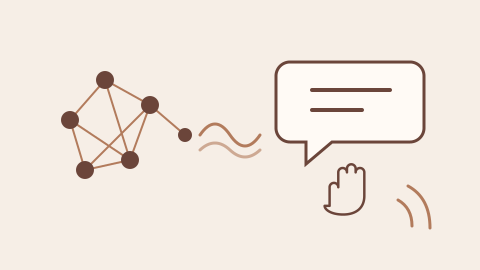
Illustration: signals from a network of brain cells travel to a speech bubble and a hand gesture.
Illustration: Everyday Abilities

Research Added

Research: a brain implant decodes speech and gestures at the same time

An NIH-funded team at UCSF showed that a brain implant in three people with severe vocal-tract paralysis could decode speech and upper-body gestures at the same time and use them to drive a virtual avatar. The study appeared in Nature Neuroscience on September 14, 2026. It is early-stage research: the system is still wired, and a wireless version is planned. It is not something you can get today.

Who it may help: People with severe paralysis, if this research one day becomes a product.

The Starkey logo: a gold star behind the word Starkey in navy.
Image: Starkey (company logo)

Hearing Added

Starkey announces Omega AI+ hearing aids

Starkey announced its Omega AI+ hearing aid family. According to Starkey, it adds AI sound processing, support for Auracast broadcast audio, custom styles with AI features, and sleep-quality tracking. Claims such as “world’s first” and “2.7 times faster” are Starkey’s own, and we have not tested them. This is a company announcement, so talk with your audiologist about what fits you.

Who it may help: People who use or are considering hearing aids.

Google’s Guided Vision graphic: white text on a dark blue background reading “Guided Vision, visual assistance tailored to your needs.”
Image: Google

Vision Added

Guided Vision comes to Gemini Live on Android

Google launched Guided Vision in Gemini Live for Android 9 and newer. Blind and low-vision users can share their phone camera and hear spoken descriptions in real time, plus spoken cues for how to reframe the shot. Google says it is not a mobility aid and not a replacement for a white cane.

Who it may help: Blind and low-vision people who use Android phones.

Back to the Tech Guide