Tech Guide · Category
Mobility
Power chairs, power-assist add-ons, all-terrain chairs, and newer devices that help people stand or walk. Mobility equipment is a big decision that usually goes through a clinician and a supplier, so it helps to go in knowing what to ask.
Tolt Ability Drive
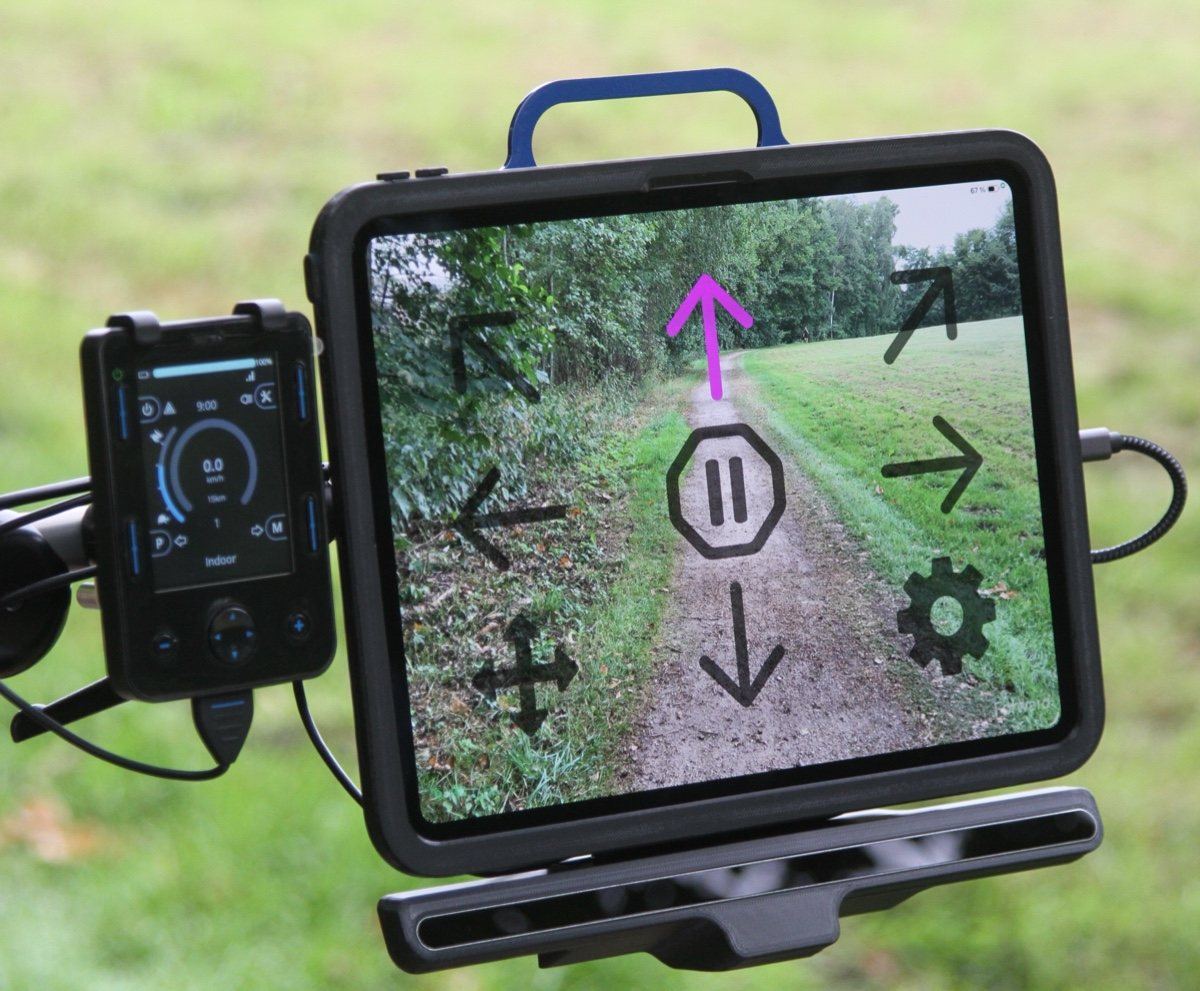
People who cannot use a joystick, such as some people living with ALS, spinal muscular atrophy, muscular dystrophy, high-level spinal cord injury, or cerebral palsy.
Permobil M4 Nexa
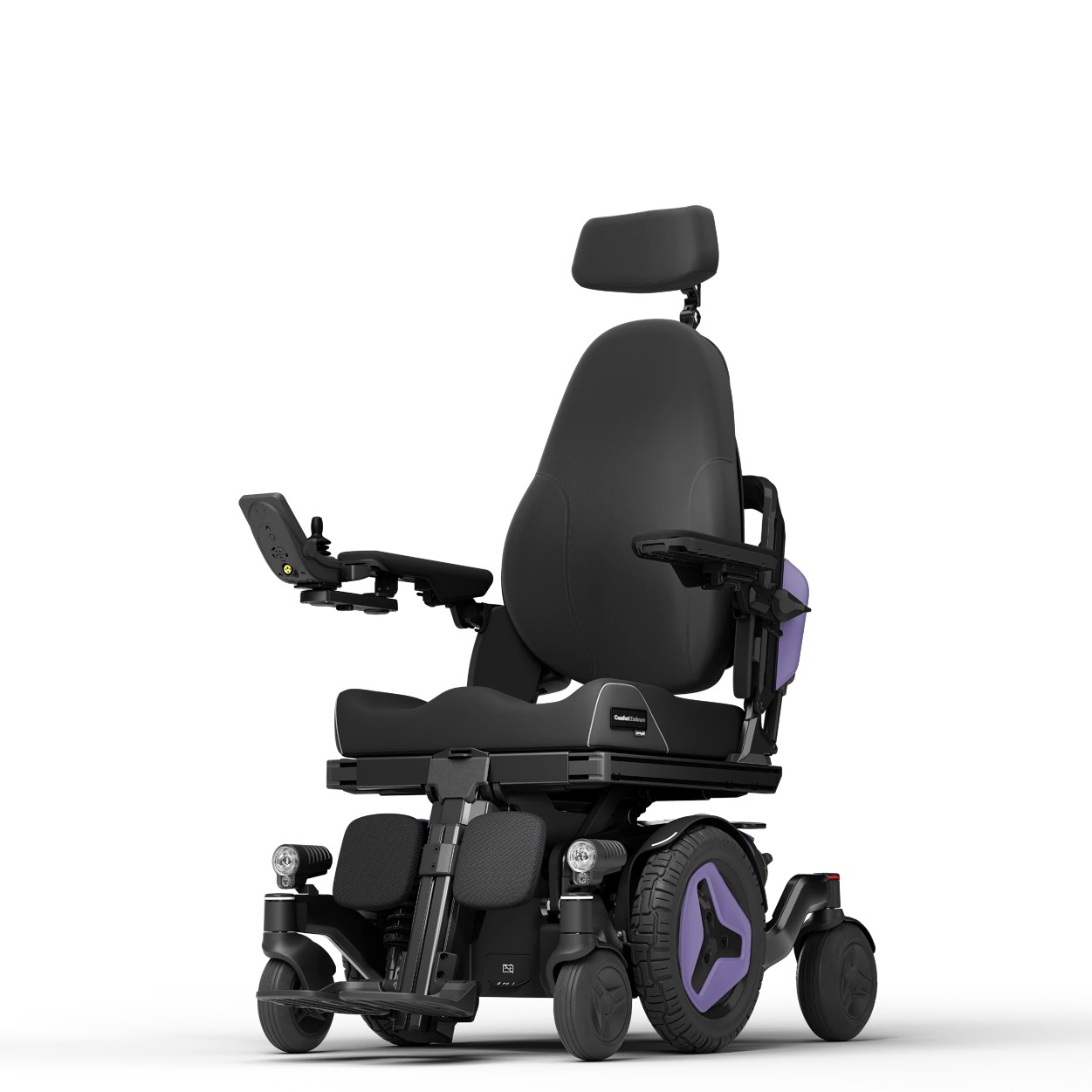
Smaller-statured power chair users who have had to choose between a chair that fits their body and a chair with full power seating.
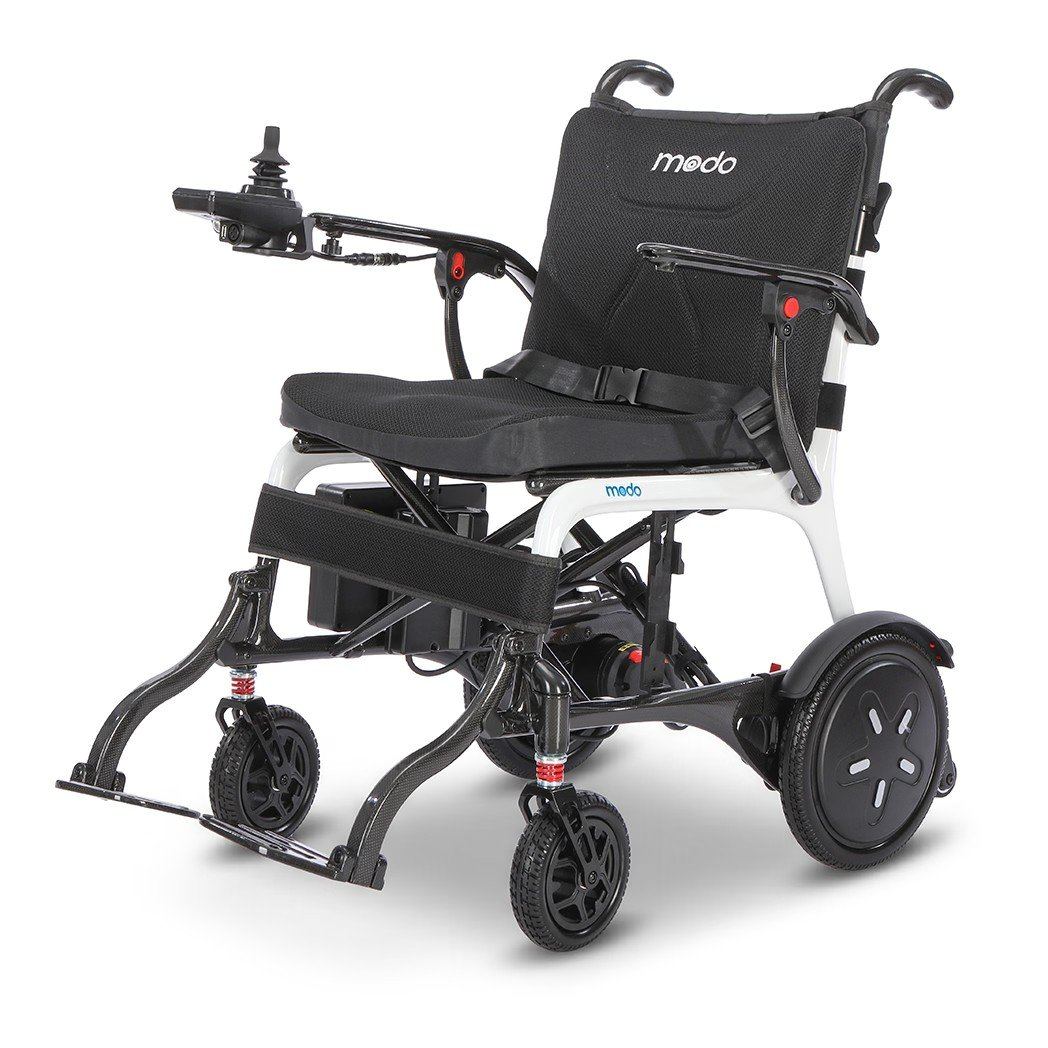
WHILL Modo Breeze
People who can transfer and want a power chair for trips, errands, and travel rather than all-day seating.
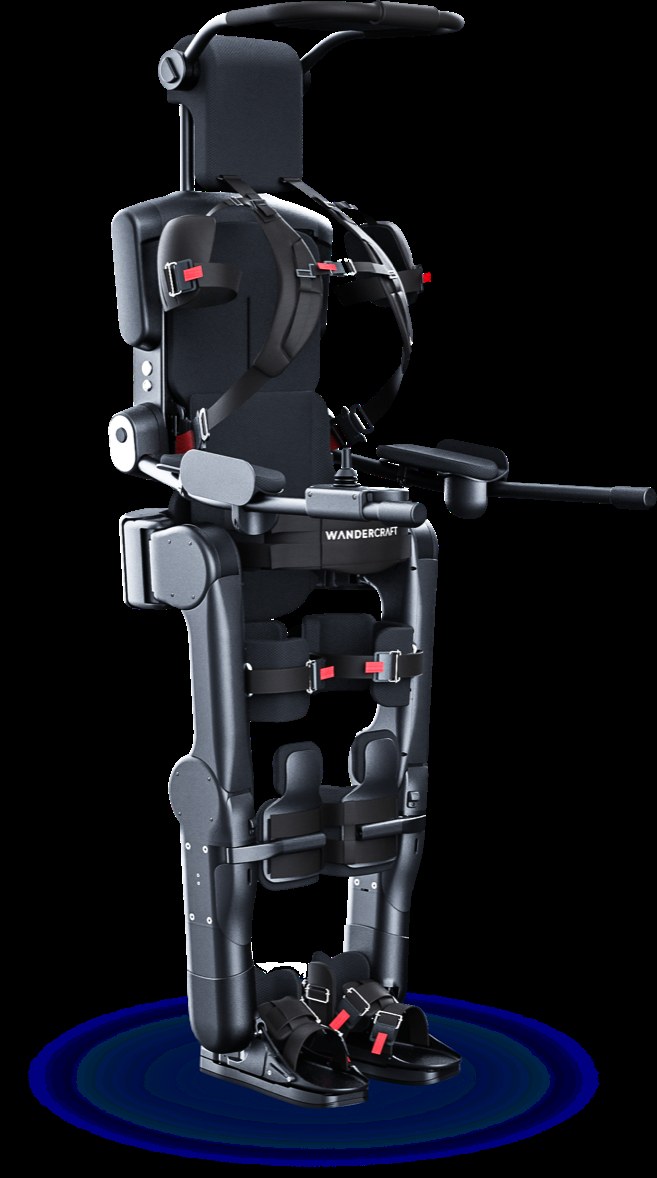
Wandercraft Eve
Eve is a prescription device that keeps its own balance, so the user can stand, walk, turn, and use both hands without crutches. It is meant to go alongside a wheelchair, not replace it, and it requires a fitting, a clinical assessment, and training with a companion.
Who it may help
Some people with spinal cord injury who use a wheelchair and want time standing and walking at home.
Questions to ask your clinician
- Do I meet the medical criteria for this device?
- Who in my life could be the trained companion?
- What would standing and walking time do for my health and goals?
Paying for it
Clinical devices like this are sometimes covered by insurance or the VA when a doctor prescribes them, and some rehab centers have one you can use on site. Ask your care team what route makes sense before you look at buying one.
Can I try one?
This is not in our Equipment Library right now. If you want help finding a place to see or try one, contact us.
Manufacturer information: Wandercraft (opens in a new tab)
Library demo Mobility
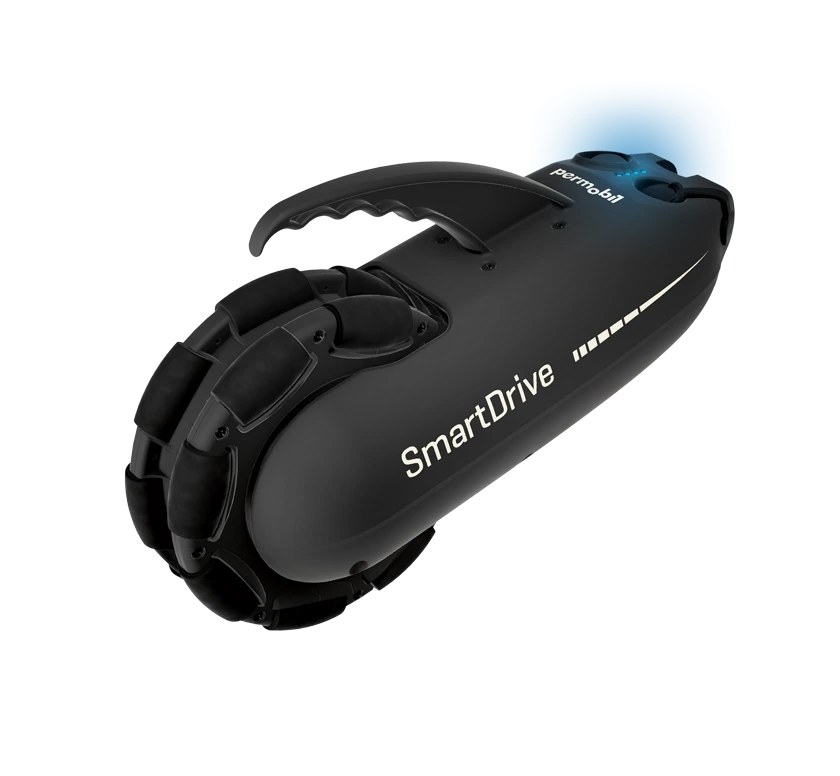
Permobil SmartDrive MX2+
SmartDrive adds a small motorized wheel to the back of many manual chairs. You control it with a switch, a dial, or a wearable, and it helps you go farther with fewer pushes.
Who it may help
Manual wheelchair users with shoulder pain, long distances, or hills, who want to keep their manual chair.
Questions to ask your clinician
- Will it fit my chair, and which control would suit my hands?
- Will the added length make tight turns harder for me?
- Could this protect my shoulders over the long run?
Paying for it
Equipment like this is often paid for, at least in part, by Medicare, Medi-Cal, private insurance, or the VA when a clinician documents why you need it. Coverage rules change and denials happen, so ask your clinician and supplier what paperwork is needed. If insurance says no, a grant program such as the Permobil Foundation may be worth a look.
Can I see one?
We keep one in our Equipment Library for in-person demos only. Use the form on that page if you want to schedule a demo.
Manufacturer information: Permobil (opens in a new tab)
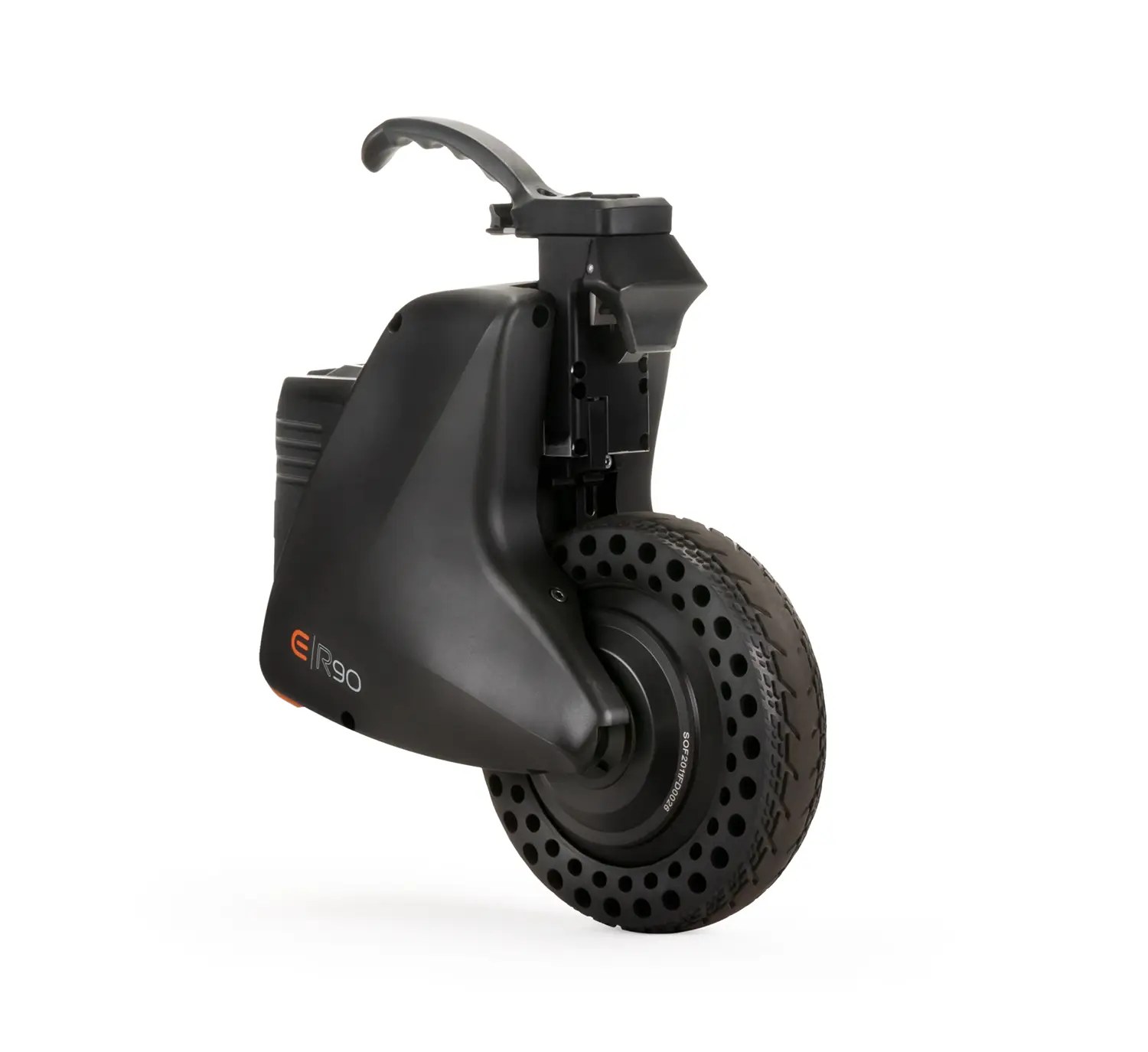
Sunrise Medical Empulse R90
The R90 attaches under many manual chairs, so it adds less length than units that stick out the back. The drive wheel lifts up when you are not using it.
Who it may help
Manual wheelchair users who want power assist but need to keep a tight turning circle.
Questions to ask your clinician
- Will it fit my chair and the way I use it?
- How would it compare with a rear-mounted unit for me?
- How do I take it off for car transfers?
Paying for it
Equipment like this is often paid for, at least in part, by Medicare, Medi-Cal, private insurance, or the VA when a clinician documents why you need it. Coverage rules change and denials happen, so ask your clinician and supplier what paperwork is needed. If insurance says no, a grant program such as the Permobil Foundation may be worth a look.
Can I try one?
This is not in our Equipment Library right now. If you want help finding a place to see or try one, contact us.
Manufacturer information: Sunrise Medical (opens in a new tab)
Library demo Mobility
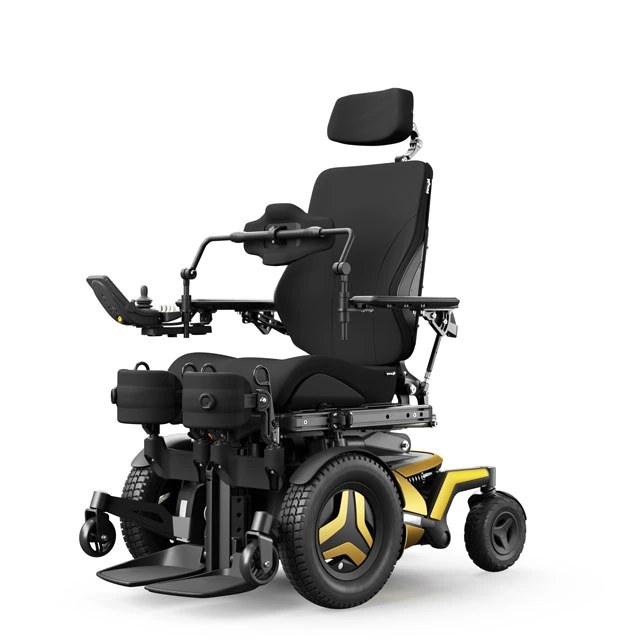
Permobil F5 Corpus VS
The F5 Corpus VS is a front-wheel-drive power wheelchair with programmable standing (sit-to-stand and related positions), chest and knee supports, and a power articulating footplate. Standing can help with reaching, talking eye to eye, and some health goals. Permobil also makes mid-wheel Corpus VS standing options; confirm current models with the manufacturer.
Who it may help
Power chair users who cannot stand on their own but whose clinician thinks standing could help.
Questions to ask your clinician
- Is standing safe for my bones, joints, and blood pressure?
- How would I use standing in a normal day?
- What documentation does insurance need for a standing chair?
Paying for it
Equipment like this is often paid for, at least in part, by Medicare, Medi-Cal, private insurance, or the VA when a clinician documents why you need it. Coverage rules change and denials happen, so ask your clinician and supplier what paperwork is needed. If insurance says no, a grant program such as the Permobil Foundation may be worth a look.
Can I see one?
We keep one in our Equipment Library for in-person demos only. Use the form on that page if you want to schedule a demo.
Manufacturer information: Permobil F5 Corpus VS (opens in a new tab)
Library demo Mobility
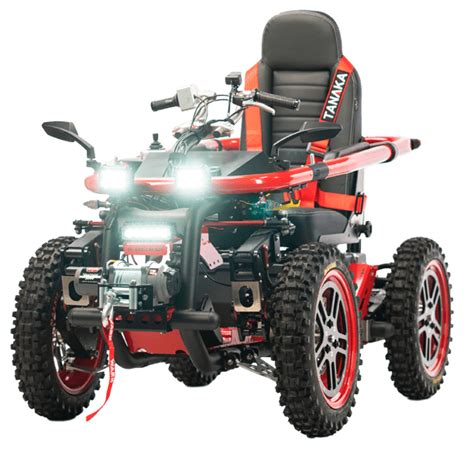
TerrainHopper
The TerrainHopper has four-wheel drive, suspension, and seating that can be adapted to the rider. It is made for places an everyday chair cannot go, like beach sand and forest trails.
Who it may help
People who want to get back on trails, beaches, or rough ground with family and friends.
Questions to ask your clinician
- Can I transfer into it safely, and do I need extra trunk support?
- What controls will work for my hands?
- How do I plan a route that is safe for my first ride?
Paying for it
Exercise equipment is less often covered by insurance. People sometimes find access through a rehab gym, an adaptive sports program, the VA, or a grant. If cost is the barrier, contact us and we can think it through with you.
Can I see one?
We keep one in our Equipment Library for in-person demos only. Use the form on that page if you want to schedule a demo.
Manufacturer information: TerrainHopper (opens in a new tab)
In the news: Mobility
-
Permobil M4 Nexa: a compact mid-wheel power chair with full power seating
New Mobility reports on Permobil’s M4 Nexa, a compact mid-wheel power wheelchair.
-
A power wheelchair paired with a robotic arm
The startup ATDev is building RAMMP, a platform that pairs a power wheelchair with a coordinated robotic arm on an open software platform.
-
Tolt launches Ability Drive eye-gaze driving for iPad
Tolt Technologies launched Ability Drive for iPad, which lets power wheelchair riders drive and adjust seating with eye gaze.


Back to the Tech Guide All Tech News
These are our own notes, written to help you have a better conversation with your clinician. They are not medical advice, and we do not sell any of these products. Want to talk it through? Contact us.